Every year, thousands of Europeans and North Americans choose to relocate to the Dominican Republic for retirement, remote work, a business project or simply a change of life. The country offers an exceptional quality of life, a cost of living significantly lower than in most Western countries, and a well-established expat community. Here is the complete guide to planning your move.
Why the Dominican Republic Attracts Expats
The DR combines assets that few destinations can claim simultaneously: a tropical climate year-round with average temperatures around 27°C, some of the most beautiful beaches in the Caribbean, direct flights from North America and Europe, no restrictions on foreign property ownership, and an active international community.
The cost of living is on average 40% lower than in France or comparable European countries, which allows you to maintain a comfortable lifestyle on a significantly lower budget. This is particularly attractive for retirees, remote workers and entrepreneurs.
Where Do Expats Settle?
Las Terrenas, the French Village
Las Terrenas, in the Samaná peninsula, has the densest French-speaking community in the country, earning it the nickname “the French village.” Canadians, Belgians, Swiss nationals and above all French residents have developed restaurants, delicatessens, medical practices and French schools here. It is an established destination with all amenities, and real estate prices to match.
Punta Cana, the Tourist Hub
Punta Cana is the country’s tourism capital, home to the country’s busiest international airport. Expatriate life is possible and services are plentiful, but the atmosphere leans more toward “resort” than “authentic local life.” Property prices here are the highest in the country.
Río San Juan, the Undiscovered Gem
Río San Juan, on the north coast, remains largely unknown to foreign residents. It is a human-scale town set against the sea, surrounded by lagoons and pristine beaches (Playa Rincón, Laguna Gri-Gri, Playa Grande). The landscapes are among the most beautiful in the country, the atmosphere is authentic, and real estate prices remain very accessible.
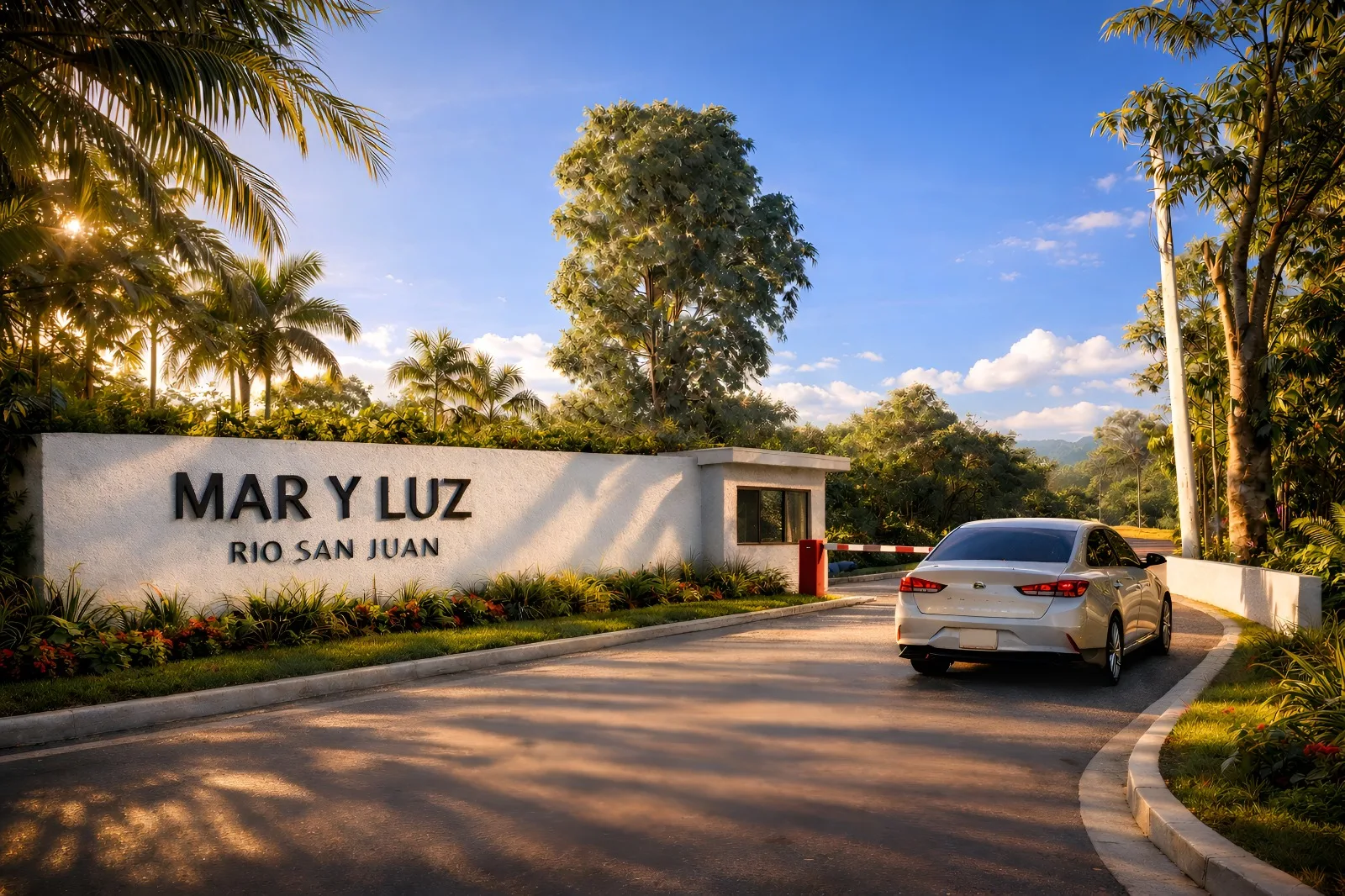
This is the region where Blue Design Caribbean has developed the Mar y Luz private residence, a villa project designed for those seeking the best of the Dominican Republic without mass tourism.
What Budget Do You Need?
Figures vary by lifestyle and zone, but here are concrete reference points for 2026:
Minimum budget (simple life, secondary city): $1,200–$1,500/month
Comfortable budget (active expat, tourist zone): $2,000–$3,000/month
Luxury budget (private villa, car, social life): $4,000+/month
Rent: a furnished villa with pool rents for between $800 and $2,000/month depending on zone and quality. A decent apartment can be found from $400/month.
Food: local produce (fruit, vegetables, fish, meat) is very affordable. Imported European or North American products are expensive. Budget $300–$600/month for food for two people.
Transport: second-hand vehicles are accessible. A 4×4 (recommended for local roads) costs between $8,000 and $20,000 depending on condition and model.
Healthcare: the Dominican healthcare system is highly variable in quality. Expats use private clinics (excellent in major cities) and take out international health insurance. Budget $100–$300/month.
Administrative Procedures
Visa: citizens of most Western countries do not need a visa to enter the DR as tourists (stay up to 30 days, renewable). For longer stays, regularisation is required.
Residency: several statuses exist. The most accessible for retirees and those with passive income is the retiree/rentista visa, which requires proof of a monthly income of at least $1,500 from abroad. The process generally takes 3 to 6 months.
Taxation: the Dominican Republic does not tax foreign-source income for its residents. Only income generated on Dominican territory is subject to local tax, a significant advantage for retirees and remote workers.
Housing: Rent, Buy or Build?
Renting is the logical first step for most new expats, giving you time to discover the region, identify the areas that suit you and test your life project before committing.
Buying an existing property is an option, but carries the limitations described above: variable construction quality, sometimes complex titles, configurations that don’t always match European expectations.
Building new remains the best solution for those who want to put down roots: you get a villa designed for you, your land and your lifestyle, with all the guarantees of a professional builder. It is also a sound investment, as a well-designed new villa appreciates as the region develops.
Daily Life
The DR offers a very enjoyable quality of life for well-prepared expats. Supermarkets in major towns are well-stocked, restaurants are numerous and varied, and internet access is good in developed areas (fibre available in main towns).
The official language is Spanish. Learning the basics is strongly recommended, even though English is widely spoken in tourist areas and French-speaking communities provide a quick reference point.
Social life is warm. Dominicans are generally welcoming to foreigners, and expat communities organise regular events.
Considering settling in the Dominican Republic? Discover Mar y Luz, Blue Design Caribbean’s private residence in Río San Juan, or contact Michel to discuss your project.